Showing posts with label NAGC. Show all posts

Monday, November 26, 2012

NAGC 2012 Recap

High expectations, innovation, bullying, neuroscience, diverse populations, curriculum, literacy, STEM, disengagement, peers, “grit”... to name just a few topics. There was a lot to talk about in only four days! 

Last week in Denver I attended the 59th annual convention of the National Association for Gifted Children (NAGC). The NAGC 2012 convention itself (Nov. 15-18) had over 3000 attendees, 1000+ from Colorado--educators, administrators, counselors, researchers and a growing number of parents. This does not include attendees of the Colorado Association for Gifted Children (CAGT’s) “Parent Day at the National” on Nov. 17, which made available many convention speakers and sessions, nor those attending the National Consortium of Specialized Secondary Schools in Math, Science and Technology (NCSSSMST) adjoining conference. The NAGC 2012 convention theme was “Reaching Beyond the Summit: Educating with Altitude”. In keeping with Colorado’s independent and motivated outlook, the convention featured challenging sessions, opportunities to dialogue with leaders in the field, time to network and collaborate, wonderful student entertainment, and enthusiastic volunteers.

Considering Consensus and Outliers


Talent Development was a recurring topic, generating much discussion. It became clear through the course of the convention that the definition of Talent Development is, itself, in development. The importance of matching individual student interests to projects, thereby promoting engagement and achievement, seem unanimously supported. And there is urgency about reaching the many students whose abilities go unrecognized and unsupported due to economic and cultural barriers. I heard firm commitment to a strong general education base. Yet concern arose that strict focus on demonstrating high achievement will leave some gifted students without vital support. What about students who aren’t highly motivated, who are unable to perform due to disability, or whose don’t find internal motivation in conforming to educational norms? In several sessions it was asked if highly gifted or twice-exceptional children (gifted and with a disability) are represented by statistics or policies.


Some Highlights of the Convention


The Leadership Forum preceded the convention, bringing together school district and community leaders to discuss unleashing the potential of gifted students in varied local circumstances. This forum included an inspiring presentation by Ron Berger, author of The Ethic of Excellence. He spoke about using project-based learning to engage students with real world problems. This kind of problem-solving gives students a sense of themselves, as they do purposeful hands-on work as part of a team. Berger shared a website where some projects are available as models already linked to Common Core standards. Speakers from Denver Art Museum, the Cherry Creek Institute for Science and Technology, and the Center for Bright Kids also shared examples of how educators can use assets in the community to inspire and support gifted and talented students. CAGT, the Colorado Department of Education, and NAGC are to be commended for co-sponsoring this unique collaborative event.

U.S. Dept of Education Asst. Secretary Deb Delisle spoke at evening reception of the Global Awareness Network. Delisle has worked as a gifted specialist, principal, district and Ohio state superintendent. In an inspiring presentation she noted that children depend on us to model leadership,that “every decision we make tells students what it is we value”. She spoke against false proxies we’ve created in learning: finishing a course isn’t achievement, listening to a lecture isn’t understanding, and getting a high score on a standardized test isn’t proficiency. And she ended her presentation with a reminder that “behind every piece of data, every number, is the heart and soul of a child wanting to achieve”.

Throughout the convention there were many reflections on the work of Annemarie Roeper, a foundational figure in gifted education who passed away this May. An active and compassionate educator for over 70 years, Roeper founded a school and wrote extensively, Her philosophy is tied to the child’s developing worldview and on valuing self-actualization and interconnectedness. It recognizes intellectual ability but also the importance of nurturing the unusual creativity and deep concern for ethics found in gifted children. Educational decisions that neglect or quash the gifted child’s “self”, including a constricted definition of achievement, won’t ultimately benefit the child or the world.

The dynamic closing speaker, Jonathon Mooney, was also particularly memorable (similar presentation in Oregon here). Mooney, who has dyslexia and ADHD, spoke of how he overcame predictions of failure, difficult learning environments and narrow ideas of intelligence. He stressed that normality is contextual and that the context of schools can make unusual children feel “broken” when what they need is advocacy and motivation. He shared that it would be valuable for children to ask “How am I smart?” instead of “How smart am I?”

Reflection


The last NAGC convention in Denver was in 2002. My husband and I attended that convention together, only beginning to grasp the needs of our gifted children. A decade later I was even more appreciative of the many high quality sessions, glad of the creative and liberating uses of new technologies, and also a bit discouraged that some foundational lessons have not yet been taken to heart. But this is why we meet. For the children’s sake, it is so important that ideas are aired, philosophies examined, and that those who care about and work with gifted children find resources to strengthen and refresh those efforts.

Experience with my own children’s struggles over the years has certainly not diminished my sense of urgency regarding appropriately meeting the needs of gifted students. There is intertwined global and individual importance to empowering children to hear and value their inner call to care, engage, learn, and create. And so it was meaningful to see people from so many places and varied personal and professional backgrounds sharing and learning together in support of these children. How wonderful to connect with others who already realize that parenting, educating and (most important!) being a gifted child are often achingly complex and challenging. I could use more days where this kind of understanding was already the norm!

Monday, October 1, 2012

Getting the Most out of the Opportunity

The opportunities to learn and speak with others who “get it” about gifted children can be both rare and enlightening.  Therefore, I believe we (families, educators, community members and other GT advocates) must fortify ourselves when we can.  The NAGC Convention/“Parent Day at the National” in November 2012 brings such an opportunity for learning and support (and to Colorado -- where I happen to live!).  I'd especially like to encourage folks to attend and share some thoughts about how to get the most out of it!

Attendance is an investment of resources already, of course.  However, putting a little further attention into some details has added to what I have personally brought away from conventions and conferences. These are some of the individual investments I would suggest for you to get the most from the NAGC Convention and “Parent Day at the National” experience:
  • Consider your goals:  Determine ahead of time what you hope to get out of the event. Spend some time thinking or writing/drawing/talking out some priorities. How would your attendance most benefit you and the gifted children in your life?  In what areas do you most want to strengthen your knowledge?  What question(s) do you most want to ask?
  • Do your research:  It doesn’t have to be a lot; focus on what is most important to you. The NAGC convention schedule is online for those registered to attending from the 15th-18th. The Parent Day schedule is also available for those attending on the 17th. Take the time to read an article if it will help you better understand a session or ask a question. Look up the layout of the convention center and surrounding area. Know ahead of time where you want to be so you use your time and energy well.
  • Equip yourself for success:  Plan you time. Take breaks if you need them.  Attend with a supportive friend or colleague (you can reflect on ideas throughout the event and afterwards). Carry small snacks and water (in Colorado you can’t have enough water!!) Wear something comfortable and carry your belongings comfortably. At the site, ask NAGC volunteers for directions.
  • Be flexible and prepared to challenge yourself a little:  Ask that key question. Introduce yourself. Meet people from other disciplines and places. (There are people attending from everywhere, all interested in GT -- business cards can be so useful for keeping track of the folks you meet!) Seize an opportunity to learn or do something new and perhaps even unexpected.
  • Note applications:  As you go along, create some form of notes about how you (or others you know) might apply what you are learning. It’s easy to think you will remember but there can be so many good ideas that, by the time you get home, it may be hard to recall specifics.
These suggestions should be thoughtfully adjusted to suit your needs. The most important thing, for the sake of your child, student, and community, is to proactively attend so that you can make a difference for gifted children.

Thursday, February 3, 2011

The Big Picture

True Confession.  I felt compelled to put my money where my mouth is this weekend. I joined the National Association for GIfted Children (NAGC).

I've been a member of the local and state gifted affiliates for years and years. Not just an active participant "member" (which I'm certainly not saying isn't a sort that counts) but a paying "member" too.

I used to have a NAGC membership many, many years ago after my oldest was first identified as gifted, but eventually let it lapse when I found that the resources I required went beyond those found in Parenting for High Potential. Our GT monies were being spent on books, conferences, homeschooling, early college....  I hope we've "payed it forward" for our community (and eventual grandkids) by staying involved with gifted education even while homeschooling. We had experience to spare, if not money!

But at a recent GT meeting I found myself realizing that if I keep looking at it as the "monetary return on investment" I'm just going to continue to be frustrated, that I need to think about the potential value in another way:
  • Do I want to put money into gifted advocacy at a federal level?
  • Do I want gifted education to have a louder "voice"?
  • Do I want parents to be better represented in gifted education?
Well, yes.

So, again, none of this is to say that I think that being physically and immediately involved in kids' lives and educations isn't the absolute priority (and, indeed, absolutely exhausting).  However, I believe that the Big Picture trickles down to that same exhausting microcosm.  As my daughter reminds me about, oh, everything, "It's a system, mom!"  While meeting individual needs is imperative, ultimately the situation will never improve if each parent and each educator continues to look ONLY at the nearest (and dearest) level.

Perspective: In our busy daily lives, we might notice the center point
--not the relation to the other factors or that they are actually moving.
 Stars around Polaris - Day 62 by Velo Steve

We ignore the Big Picture at our (exhausted) peril. Each GT parent and educator should not have to "re-invent the wheel", nor should they feel they are alone with their struggles, questions or celebrations. Therefore connecting to the larger gifted community is important, not just for ourselves but for others.

Where I've connected in time, effort, and participation, it has made a difference for our family and for me personally. While any kind of involvement may not mean an immediate return, I've found over the years that what I've put in does have a way of "paying off" in the end.

But I realized I might need to turn the perspective around and also consider the ways my individual choices impact the larger picture. And NAGC membership is a pretty straightforward way to connect, especially as they
  • take a stronger role in advocacy 
  • reach out more to parents, and 
  • have a strategic plan to encourage the public's value and support of gifted learners. 
No one can take on those Big Picture tasks individually, even though we all value them. But together we can contribute to their success.

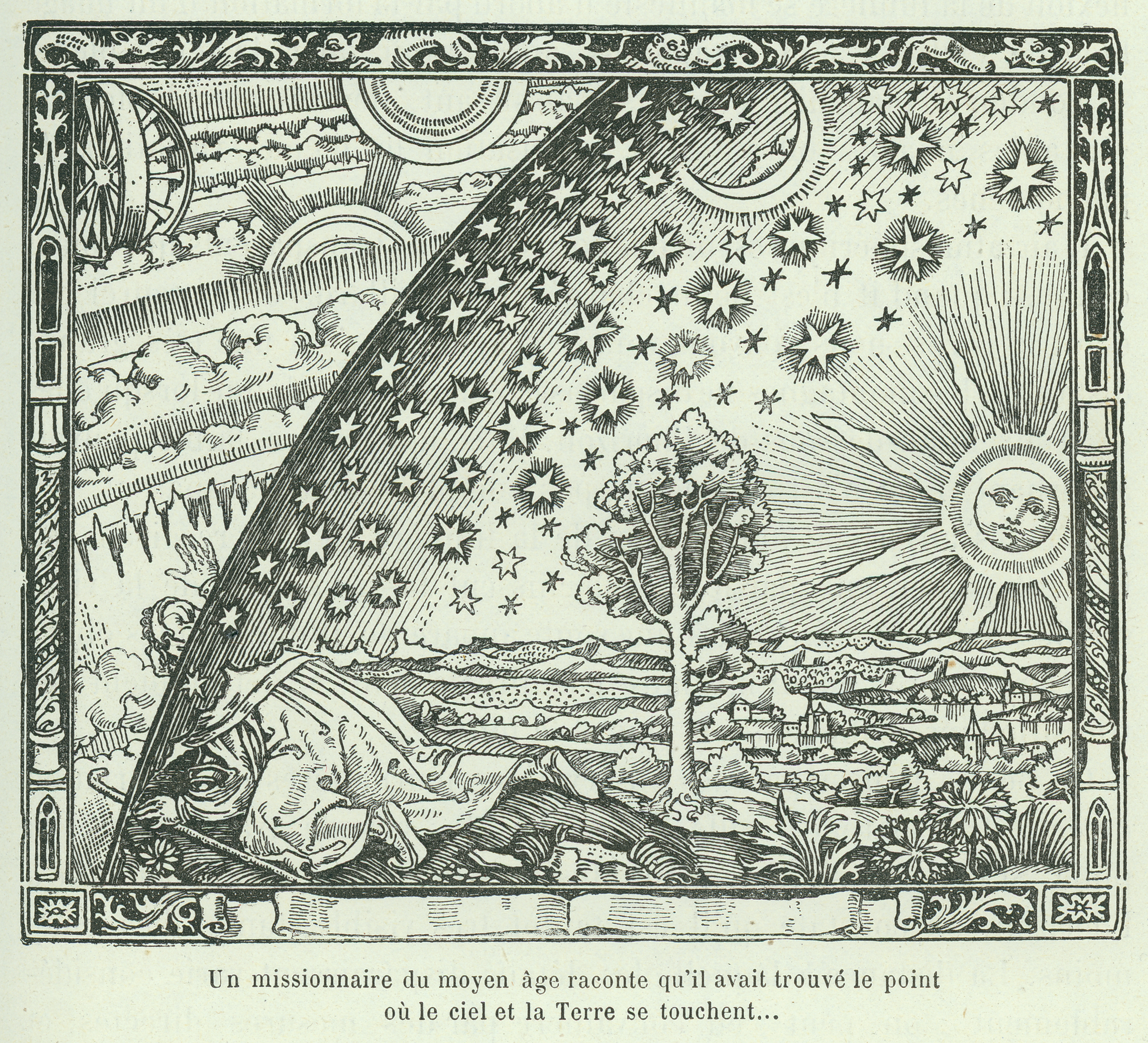
Looking beyond the immediate
Camille Flammarion's L'atmosphère: météorologie populaire (Paris, 1888), page 163.