Showing posts with label parenting. Show all posts

Thursday, February 3, 2011

The Big Picture

True Confession.  I felt compelled to put my money where my mouth is this weekend. I joined the National Association for GIfted Children (NAGC).

I've been a member of the local and state gifted affiliates for years and years. Not just an active participant "member" (which I'm certainly not saying isn't a sort that counts) but a paying "member" too.

I used to have a NAGC membership many, many years ago after my oldest was first identified as gifted, but eventually let it lapse when I found that the resources I required went beyond those found in Parenting for High Potential. Our GT monies were being spent on books, conferences, homeschooling, early college....  I hope we've "payed it forward" for our community (and eventual grandkids) by staying involved with gifted education even while homeschooling. We had experience to spare, if not money!

But at a recent GT meeting I found myself realizing that if I keep looking at it as the "monetary return on investment" I'm just going to continue to be frustrated, that I need to think about the potential value in another way:
  • Do I want to put money into gifted advocacy at a federal level?
  • Do I want gifted education to have a louder "voice"?
  • Do I want parents to be better represented in gifted education?
Well, yes.

So, again, none of this is to say that I think that being physically and immediately involved in kids' lives and educations isn't the absolute priority (and, indeed, absolutely exhausting).  However, I believe that the Big Picture trickles down to that same exhausting microcosm.  As my daughter reminds me about, oh, everything, "It's a system, mom!"  While meeting individual needs is imperative, ultimately the situation will never improve if each parent and each educator continues to look ONLY at the nearest (and dearest) level.

Perspective: In our busy daily lives, we might notice the center point
--not the relation to the other factors or that they are actually moving.
 Stars around Polaris - Day 62 by Velo Steve

We ignore the Big Picture at our (exhausted) peril. Each GT parent and educator should not have to "re-invent the wheel", nor should they feel they are alone with their struggles, questions or celebrations. Therefore connecting to the larger gifted community is important, not just for ourselves but for others.

Where I've connected in time, effort, and participation, it has made a difference for our family and for me personally. While any kind of involvement may not mean an immediate return, I've found over the years that what I've put in does have a way of "paying off" in the end.

But I realized I might need to turn the perspective around and also consider the ways my individual choices impact the larger picture. And NAGC membership is a pretty straightforward way to connect, especially as they
  • take a stronger role in advocacy 
  • reach out more to parents, and 
  • have a strategic plan to encourage the public's value and support of gifted learners. 
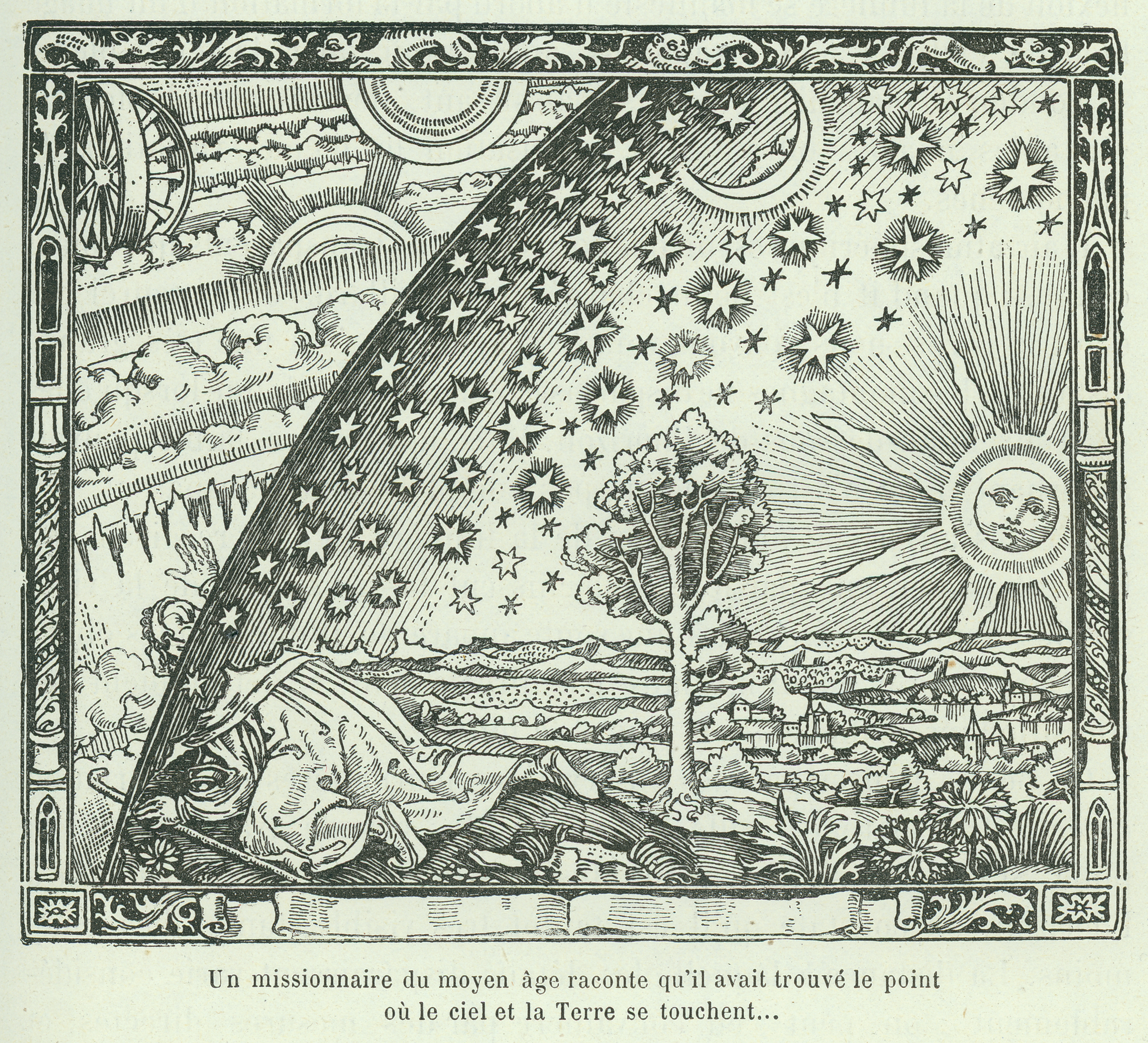
No one can take on those Big Picture tasks individually, even though we all value them. But together we can contribute to their success.

Looking beyond the immediate
Camille Flammarion's L'atmosphère: météorologie populaire (Paris, 1888), page 163.

Tuesday, December 14, 2010

Promoting a Book that Promotes Twice-Exceptional Understanding

I now interrupt the flurry of holiday advertisements with one of my own, but only because it feels too important to put off. This new twice-exceptional resource is one of the best I've EVER read. And the holiday break would be a great time for anyone to do a first pass of this book and be ready to use it in January.

drum roll please...

The book I think we've all (parents, educators, counselors, etc.) been waiting for: Twice-Exceptional Children: Understanding, Teaching and Counseling Gifted Students by Beverly A. Trail, Ed. D.


This book "gets it" and is the whole package: a discussion of the different twice-exceptionalities, the facets of their impact, what to about them. There is a solid RtI explanation at last! And a discussion of the continuum of needs and services (assessments, briefly what these might reveal about strengths and challenges, an overview of the different services and strategies the many specialists might collaborate to offer, and then real suggestions about what this might look like). Discussion of executive functioning, cognitive style, self-actualization. I love that socio-emotional is wrapped in as a significant component to academic success. References woven artfully into the easy-to-read text. Actual plans for accommodations!

As a parent and advocate for gifted students, I want this book--and the breadth and depth of information it offers in one place--to be something with which every one of my children's teachers is very familiar; I'm sure it is a reference that they would often reach for, that they would share with parents and even their students, and it would make everyone's lives easier! Some parents might initially shy away from the "educational" title and the charts and figures offered inside but many of these offer tools that are valid at home as well as in the classroom.

Sometimes the hardest part of determining how to help a twice-exceptional student is simply knowing what questions to ask along the way. The appendix here offers a Twice-Exceptional Planning Continuum to help teachers and administrators (and counselors and parents and students) consider the assessment data, plan interventions, and monitor progress (the chapters support the planning). Excellent points for discussion that could be used as an "outside" guide to take a meeting from a place of personal frustration to an active plan recognizing individual need and implementing change.

If all the stakeholders in gifted and twice-exceptional student education were to be familiar with the insights and suggestions in this book, so much practical progress could be made: everyone would be on the same page (so to speak) with a foundation and strategies for early intervention and twice-exceptional student success!

Read how to implement the change you want to see in the world!

Note: I encourage you to support the HoagiesGifted webpage at no additional cost to you: click one of the Hoagies affiliate links before you shop, such as if purchasing this wonderful book via Prufrock Press or one of the booksellers.

Saturday, September 18, 2010

Apoxyomenos and the Lesson of Biomineralization

A friend sent me an email. She said she didn’t know who else she could tell, who else might not think she was being an "overprotective crazy parent".

She’d signed her four-year-old son up at a private gifted school. All seemed well until the school year was about to start and suddenly her son was not in with the expected teacher or classmates. She called them. No reply. She finally went to the school and they told her that after a twenty minute "interview" of her son and nine other children they could tell he wasn’t smart enough to be in with kids his own age and they wanted to put him in with the three-year-olds. Now they wanted to have her convince her son that this scenario would be better for him.

This is a little boy who has told me about corrosion. Because he knows ALL about corrosion (eg. I am trying to see if he’ll draw me a picture of "Apoxyomenos" because he knows all about him/it; I confess I didn’t but I now know it’s a 2000-year-old bronze statue of an athlete raised from the Adriatic Sea in 1999, the restoration of which has taught scientists a lot about biomineralization and how certain mineral deposits slow deterioration). I suspect that this little guy may have had a difficult time finding anyone else with his level of intensity or expertise about engineering among the nine other four-year-olds. Or he may have felt a little shy. Or just have been polite and let others speak. Regardless, he is one of the smartest children I’ve ever met (and I’ve met some doozies); the interviewer completely missed the boat.

Thank goodness his mom trusts her knowledge of her son better than I did mine at that stage of the game. I assumed that when I asked if my oldest might be gifted and teachers said, "Meh. He’s OK. Nothing special." that because they were "the experts", they must know and my instincts were wrong. That misplaced trust (and responsibility) was my mistake as a young parent, but my son paid for it. He grew increasingly depressed. We later found out he was bored out of his mind but trying desperately to fit in; he thought something was wrong with him. 

Fortunately my friend told the crazy school—the "gifted" school—there was no way she was manipulating her child—or that he was attending there! Good for her! She clearly understands about intentional GT biomineralization: about providing a protective layer when needed, about preserving the important things, about modifying the situation, about recognizing and advocating for her son’s needs in a difficult environment.

Part of me rises up in furious indignation at what she is going through. But at this point another part sighs, beginning to feel resigned. I know this story only too well. As angry as it makes me, I cannot feel surprised. Little has changed in the 16 years since my oldest son was that age. And precious little in the eleven since my youngest son was four either.

Except that their childhoods are gone.

They are young men. My oldest son is a graduate student now, my youngest a junior in high school. (My daughter is a college sophomore.) We arrive at this current point following years of patchwork educational experiences—largely homeschooling after we realized finding “fit” in the system was an effort in beating our collective heads into the wall (I guess we all biomineralize in our own way).

However, such unmet needs were nothing new when my children were little either. In Stephanie Tolan’s 1985 article "Stuck in Another Dimension: The Exceptionally Gifted Child in School" she noted the damage being done to gifted children who were unchallenged or held back out of ignorance, and she asked for change. That was twenty-five years ago! A generation.

I’ve been told that I expect too much. That I should be more patient. That change takes time. Well, how MUCH time? Seriously. How many childhoods or generations? Should I be patient if my children are only moderately depressed instead of mostly, due to their needs not being met? Should I be satisfied that the least-bad option has been to homeschool. That my oldest two couldn’t get public high school diplomas because the system was too rigid? Wouldn't it be better to create a safe, non-corrosive environment where learning and growing are the focus instead of forcing students, parents and educators to expend resources simply to keep children from being damaged?

Too late for my children but time is passing and it brings new, hopeful students every year. Because I wonder how in good conscious I can not do my best, having seen the damage we have, for any other mother's child if I can help mitigate it. Don't they deserve better? Instead, that four-year-old children who can speak passionately and knowledgeably about corrosion have their gifts go unrecognized, that their mothers are encouraged to hold them back, breaks my heart. Again.

So, I guess I’m not so resigned after all. I don’t want to be patient (perhaps I don't know how to be.) I want to support parents and educators like my friend, who know that a child who can get excited about Apoxyomenos and his lack of corrosion has amazing gifts that must be protected and nurtured. And I don’t think we should wait for this little guy’s childhood to pass by. He’s four and I think he’s waiting for us to catch up to him as it is.

Thick incrustation that protected the bronze and patina from corrosion (photo: Croatian Conservation Institute)

restored sculpture of Apoxyomenos, preserved under the biomineralization (photo: American Chemical Society)

Tuesday, August 17, 2010

When Worlds Collide (Or Diverge): An Inaugural Blog

NAGC (National Association for Gifted Children) sent out a poll and included in the questions was one asking about subscriptions to parenting magazines.  While I no longer subscribe to any, the question provoked an apt launching point for this blog. 

My two parenting magazine subscriptions:  
  • Family Fun:  Arch-typical Disney fantasy all they way.  Amazingly cute and user-friendly crafts, costumes, snacks, vacation articles, recipes, health articles, etc.  Nicely presented and packaged.  Pleasantville in magazine form.  A real “porch” read.  I confess that I stilI love thumbing through it –the beautiful modern, if commercial, idylls written on those glossy pages–and it inspired some lovely birthday parties.
  • LifeLearning Magazine:  Unschooling. Unrepentant and subversive. From our early years (perhaps our BEST years) homeschooling.  I kept the subscription for a long time because it inspired me, speaking to autonomous learning and parenting better than any other single publication I read. But overall it wasn’t quite our family’s reality either.

Welcome to my world.  Or worlds.

The whole magazine scenario, brought to the fore by the NAGC questionnaire, is a metaphor for our entire parenting and schooling experience.  Because I don't think there's a magazine for the creative parenting undertaken at our house. Instead it's been vaguely charted territory, best addressed in the supportive emails found on the listserves of the incredibly generous gifted online community.  But unfortunately there’s no HoagiesGifted Magazine.  No little piece of "home" to arrive in my mailbox, complete with photos and "how-to's" every month. (Not that my children would have enjoyed following a step-by-step—and, heck, I don’t do well with following directions myself—but some sort of a reference beyond "Thar Be Dragons" would have been nice, because the warning wasn’t going to do any good; the kids were launching us into Terra Incognita regardless.)

Nevertheless, I remember the tinge of remorse that accompanied the eventual intentional lapsing of both subscriptions in recognition that the children had grown older.  For better or worse, that ship had sailed and we'd already whipped past the benefits to be gained or ideals marked by the magazines' charts.  Had we wanted to add those ports?  Had we managed to?  Sometimes yes, sometimes no.   But the ship sails on. . . .

Here's a homemade Christmas card from many years back.  Despite the the unschooling and the frequent fights with the system, clearly I've never been able to move past a certain desire to embrace the traditional.  (We were stretching a bit further back than Norman Rockwell:  the costuming is for St. Lucia and, yes, that is live flame atop my child's head.)


Recognizing that gifted adults are unlikely to find a single destination in life appropriate or desirable to them, my husband and I have done our best to encourage our children to approach life's diversity as travelers:  to live in many worlds (literally and metaphorically), to be at home in their own skins, to be flexible thinkers and creative problem solvers, and hopefully to know that they will always find safe harbor with us.  Now they are reaching the age where it is less about equipping them for their own journeys and, alarmingly, more about seeing how they begin to fare.

As for those magazines and the sometimes-perplexing juxtaposition between the microcosms of expectations and reality they present:  On the up-side, I can still whip up an awesome Halloween costume when the need arises.  But I'm more pleased that I ended up with creative individualists who enjoy making their own.

CookieMonster Slayer: willing to wear costumes even without occasion to during her two-year stint at public high school, my daughter enjoyed classmates' responses to this not-so-Family-Fun costume two Halloweens ago.