Friday, March 25, 2011

Going Up? A Gifted Education "Elevator Pitch"

 Do you have an elevator pitch for gifted education?


What if you suddenly have the (brief!) opportunity to speak with a key legislator, administrator, or perhaps skeptical educator or parent about gifted education (note: actual elevator not required).  What will you say?

A little preparation will help you think clearly, make the most of the moment, and forward the cause of gifted students.

GT education is important:
  • For the future: Confining students to educational environments they don't find challenging or supportive doesn't give them the tools necessary to become the innovators, the creators, the leaders, nor the involved members of the 21st century global community who they have the potential to become.
  • For educational best practices:  Teachers trained to work with gifted learners benefit all students. Many successful learning strategies now touted in regular classrooms due to their benefits in flexible grouping and academic rigor actually originated in gifted education. 
  • For meeting children's needs:  Every child deserves to have his or her academic and socio-emotional needs met.  Gifted learners from disadvantaged backgrounds are particularly dependent on public schools to meet their educational needs, but these students are also especially likely to be unidentified and underserved.
Each of these points is a reason for advocacy and hours of discussion onto itself.  However, the idea is to summarize and present three key points as to the value of gifted education in the time span of an elevator ride (approximately thirty seconds to two minutes).

Be clear and brief. Speak with passion. Be prepared and flexible about answering questions--ask for the opportunity to have a more thorough discussion!

NAGC advocacy themes

    Thursday, February 3, 2011

    The Big Picture

    True Confession.  I felt compelled to put my money where my mouth is this weekend. I joined the National Association for GIfted Children (NAGC).

    I've been a member of the local and state gifted affiliates for years and years. Not just an active participant "member" (which I'm certainly not saying isn't a sort that counts) but a paying "member" too.

    I used to have a NAGC membership many, many years ago after my oldest was first identified as gifted, but eventually let it lapse when I found that the resources I required went beyond those found in Parenting for High Potential. Our GT monies were being spent on books, conferences, homeschooling, early college....  I hope we've "payed it forward" for our community (and eventual grandkids) by staying involved with gifted education even while homeschooling. We had experience to spare, if not money!

    But at a recent GT meeting I found myself realizing that if I keep looking at it as the "monetary return on investment" I'm just going to continue to be frustrated, that I need to think about the potential value in another way:
    • Do I want to put money into gifted advocacy at a federal level?
    • Do I want gifted education to have a louder "voice"?
    • Do I want parents to be better represented in gifted education?
    Well, yes.

    So, again, none of this is to say that I think that being physically and immediately involved in kids' lives and educations isn't the absolute priority (and, indeed, absolutely exhausting).  However, I believe that the Big Picture trickles down to that same exhausting microcosm.  As my daughter reminds me about, oh, everything, "It's a system, mom!"  While meeting individual needs is imperative, ultimately the situation will never improve if each parent and each educator continues to look ONLY at the nearest (and dearest) level.

    Perspective: In our busy daily lives, we might notice the center point
    --not the relation to the other factors or that they are actually moving.
     Stars around Polaris - Day 62 by Velo Steve

    We ignore the Big Picture at our (exhausted) peril. Each GT parent and educator should not have to "re-invent the wheel", nor should they feel they are alone with their struggles, questions or celebrations. Therefore connecting to the larger gifted community is important, not just for ourselves but for others.

    Where I've connected in time, effort, and participation, it has made a difference for our family and for me personally. While any kind of involvement may not mean an immediate return, I've found over the years that what I've put in does have a way of "paying off" in the end.

    But I realized I might need to turn the perspective around and also consider the ways my individual choices impact the larger picture. And NAGC membership is a pretty straightforward way to connect, especially as they
    • take a stronger role in advocacy 
    • reach out more to parents, and 
    • have a strategic plan to encourage the public's value and support of gifted learners. 
    No one can take on those Big Picture tasks individually, even though we all value them. But together we can contribute to their success.

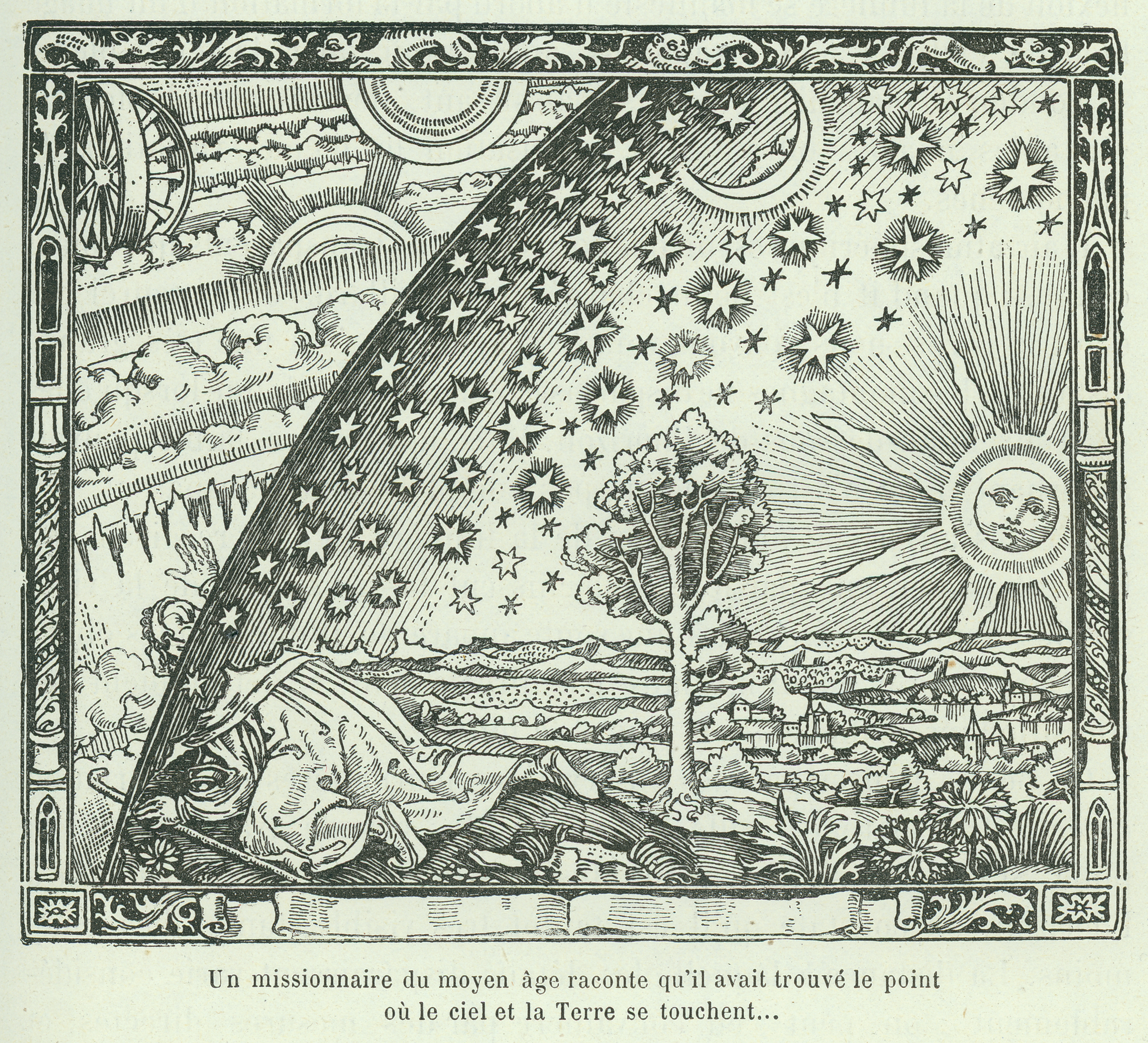
    Looking beyond the immediate
    Camille Flammarion's L'atmosphère: météorologie populaire (Paris, 1888), page 163.

    Tuesday, December 14, 2010

    Promoting a Book that Promotes Twice-Exceptional Understanding

    I now interrupt the flurry of holiday advertisements with one of my own, but only because it feels too important to put off. This new twice-exceptional resource is one of the best I've EVER read. And the holiday break would be a great time for anyone to do a first pass of this book and be ready to use it in January.

    drum roll please...

    The book I think we've all (parents, educators, counselors, etc.) been waiting for: Twice-Exceptional Children: Understanding, Teaching and Counseling Gifted Students by Beverly A. Trail, Ed. D.


    This book "gets it" and is the whole package: a discussion of the different twice-exceptionalities, the facets of their impact, what to about them. There is a solid RtI explanation at last! And a discussion of the continuum of needs and services (assessments, briefly what these might reveal about strengths and challenges, an overview of the different services and strategies the many specialists might collaborate to offer, and then real suggestions about what this might look like). Discussion of executive functioning, cognitive style, self-actualization. I love that socio-emotional is wrapped in as a significant component to academic success. References woven artfully into the easy-to-read text. Actual plans for accommodations!

    As a parent and advocate for gifted students, I want this book--and the breadth and depth of information it offers in one place--to be something with which every one of my children's teachers is very familiar; I'm sure it is a reference that they would often reach for, that they would share with parents and even their students, and it would make everyone's lives easier! Some parents might initially shy away from the "educational" title and the charts and figures offered inside but many of these offer tools that are valid at home as well as in the classroom.

    Sometimes the hardest part of determining how to help a twice-exceptional student is simply knowing what questions to ask along the way. The appendix here offers a Twice-Exceptional Planning Continuum to help teachers and administrators (and counselors and parents and students) consider the assessment data, plan interventions, and monitor progress (the chapters support the planning). Excellent points for discussion that could be used as an "outside" guide to take a meeting from a place of personal frustration to an active plan recognizing individual need and implementing change.

    If all the stakeholders in gifted and twice-exceptional student education were to be familiar with the insights and suggestions in this book, so much practical progress could be made: everyone would be on the same page (so to speak) with a foundation and strategies for early intervention and twice-exceptional student success!

    Read how to implement the change you want to see in the world!

    Note: I encourage you to support the HoagiesGifted webpage at no additional cost to you: click one of the Hoagies affiliate links before you shop, such as if purchasing this wonderful book via Prufrock Press or one of the booksellers.

    Saturday, November 13, 2010

    It's Not Rocket Science. Clearly.

    In 2005 the National Academies created a bipartisan group which strongly recommended 10 actions the federal government could take to enhance science and technology so the US would be globally competitive in the 21st century. Reading the report, it is as much about supporting innovation as about science."Rising Above the Gathering Storm Revisited: Rapidly Approaching Category 5", an updated  2010  report notes, the progress that has been made (or the lack thereof):  "The committee concluded that the United States appears to be on a course that will lead to a declining, not growing, standard of living for our children and grandchildren (p. 19).


    Where does gifted education fit in?

    Recommendation C: Make the United States the most attractive setting in which to study and perform research so that we can develop, recruit, and retain the best and brightest students, scientists, and engineers from within the United States and throughout the world. (p.30)

    Gifted education is, of course, more encompassing than math or science. As is education in general. But basic "literacy" in science and math is critical to modern individual success. And fostering innovation is clearly proving to be central to the current and future health of the U.S. as a nation, not just in "the sciences" but in all the technologies and economies that innovation trickles down to and later supplies.

    As Dr. Ann Robinson, president of the National Association for Gifted Children, noted in NAGC's press release about the report, "If we fail to identify and cultivate our most promising minds beginning as early as possible, we will squander this talent and cripple our ability to compete and thrive in the years and decades to come"

    This may well be a opportune time to promote gifted education. Apparently passé since the Cold War--"the best and brighest" are looking more relevant now. Dr. Sally Beisser's 2008 analysis of the Unintended Consequences of No Child Left Behind Mandates on Gifted Students corroborates sentiment found in the Fordham Report: “Teachers want these advanced students to move up the list of education priorities because educating them properly is the right thing to do and because it’s good for the nation, but mostly because they see in their own classrooms youngsters whose considerable talents are not adequately challenged or fully utilized.” Dr. Del Siegle noted in the State of the States in Gifted Education Report that, "In the age of Sputnik, we put money into math and science, and we ended up on the moon...We really need to consider that again. We cannot afford as a country to ignore talent." The knowledge of the "right thing" isn't new. It only takes a national crisis for the support of innovation and sound educational practice to swing back into practical consideration.

    Innovation should be valued and fostered. It is showing itself to be a national resource. This would indicate the importance of:
    • providing a solid background in math and the sciences
    • recognizing and nurturing creativity and potential in individuals

    STEM (Science, Technology, Engineering, Math) should be finding considerable support among educators, legislators and the public. However, creativity and problem-solving skills must be actively nurtured alongside STEM disciplines. Although the rudiments might be imposed, originality itself cannot be decreed but must be cultivated.
      The Gathering Storm recommendations clearly appreciate the importance of educators, K-20: "The two highest priority actions for the nation, in the view of the Gathering Storm committee, are to provide teachers in every classroom qualified to teach the subject they teach and to double the federal investment in research" (p.30) And gifted education has long been a front-runner promoting creativity, autonomous learners and high achievement in the classroom, a voice for the often unheard young innovators-to-be.

      The mission is clear: support GT education so gifted students can become the inspirational innovators and creative problem-solvers that they deserve to be as individuals and so that they have been nurtured as future generations might hope and need. Further, value and make available strong GT education so it can provide models for general educational success. And let us do whatever we can to hasten this because the foundation required to become a rocket scientist (of whatever sort, as innovation indeed comes in many forms) is best started early.

      Ask your legislators and community leaders if they've read the Gathering Storm report and what they are doing to ensure that the future of US innovation is supported now.

      We had more sports-exercise majors graduate than electrical engineering graduates last year. If you want to become the massage capital of the world, you’re well on your way.”
      Jeff Immelt, CEO, General Electric Co.

       If you don’t solve (the K-12 education problem), nothing else is going to matter all that much.”
      -Alan Greenspan, former Chairman, Federal Reserve 


      See also: the Davidson Institute for Talent Development 's National Statistics about "Why our Nation Needs to Educate our Gifted and Talented Youth".

      Thursday, November 11, 2010

      Kurt Vonnegut: Dystopia toward a Better World

      Laughter and tears are both responses to frustration and exhaustion. I myself prefer to laugh, since there is less cleaning up to do afterward. -Kurt Vonnegut, Jr.

      Today is Kurt Vonnegut, Jr.'s birthday (November 11, 1922 – April 11, 2007).

      We're big fans of his writing at our house. His dark wit was born not only of frustration and humor but also, I think (as with good speculative fiction in general), with a view toward having the reader revisit uncomfortable issues and take a closer look. Reframe. Look again and work harder. And ultimately make things better in the "real" world.

      If you aren't familiar with Vonnegut's writing--or wonder what it might have to do with gifted kids--check out his dystopian take on intellectual elitism in the short story "Harrison Bergeron".

      THE YEAR WAS 2081, and everybody was finally equal. They weren't only equal before God and the law. They were equal every which way. Nobody was smarter than anybody else. Nobody was better looking than anybody else. Nobody was stronger or quicker than anybody else. All this equality was due to the 211th, 212th, and 213th Amendments to the Constitution, and to the unceasing vigilance of agents of the United States Handicapper General.   -from "Harrison Bergeron" by Kurt Vonnegut, Jr.

      It's a scary world if the law is that everyone must be the same, even worse when Diana Moon-Glampers enforces it. Certainly some GT kids relate to the frustration that the story's brings to the fore. Although set in a nasty fictional place, Vonnegut's story also offers a venue to explore truths about identity and expectations.

      Worth a read and a discussion. And thinking about how to apply truths from fiction to make the world we live in better.

      Tuesday, November 2, 2010

      Get Smart! Try Gifted Advocacy with the Feds

      The old "Call Your Legislator" trick.
      Last week I attended the SENG conference (in conjunction with the New England Conference for the Gifted) in Hartford, CT. There, among many thought-provoking sessions, I had the opportunity to hear Dr. Del Siegle (who wrote the Gifted Children's Bill of Rights) speak about NAGC's ABCs of advocacy.

      I returned from the conference to my own state where, although there is a GT mandate it is only very partially funded (and some of that allocation is presently up in the air). As one can see from the Davidson Gifted Education State Policy page, GT ed can range from mandated and fully-funded to nothing at all. And such policy has an enormous impact on the families who depend on public education for their children. This certainly includes low-income students but also a broader spectrum; private education is not an alternative readily available to many families economically, geographically, or for a number of other dynamics.

      But if students, parents and educators presently find a need to appeal for gifted "rights" in practice--for the appropriate public education of those students who have "the ability to grapple with complexity”--they may find they court only disappointment. There is no demand for consistency in how gifted students' needs are met within state educational systems nor across the US overall (see some of the boggling array graphed on HoagiesGifted). And there is no federal gifted policy to ensure that teacher training includes identifying and serving GT students (especially important when so many gifted students are in regular classrooms). Nor is there federal funding to support this.

      What to do???  Legislators may not realize gifted education is important unless:
      • they hear from parents and educators (students too!)
      • they read about continuing GT needs in the papers (although a success story can make a good point as well)
      • the issues are presented as significant to the nation and future, as well as to a few impassioned individuals (who may also happen to be constituents)
      Volume. Persistence. Personal connection.

      Get Smart! Sign up for NAGC's Legislative Action Network to find out about advocating for gifted children, locally but with national intent.

      Friday, October 1, 2010

      Sea-Change, Social Networking and Songs of the Deep

      Full fathom five thy father lies:
      Of his bones are coral made:
      Those are pearls that were his eyes:
      Nothing of him that doth fade
      But doth suffer a sea-change
      Into something rich and strange.
      Sea-nymphs hourly ring his knell:
      Hark! now I hear them—ding-dong, bell.
      --Ariel in The Tempest (I, ii)

      Apparently something about raising gifted kids inspires my husband and me to nautical references: eg."Why is the rum always gone?" So it's appropriate that just the other day I was telling someone I thought gifted education and legislation is undergoing a sea-change.

      Social networking is doing this, by uniting and giving voice to the GT community. Many parts of the deep transformation, started years ago, are starting to show their luster in ways my husband and I might only have dreamed some dozen years ago when we set out on our family's the frantic quest for answers, understanding, guidance, and empathy.

      In The Tempest, Ariel speaks of a transmutation where, although the basic form remains, its very nature has changed from something common into something fine. The GT community (or "tribe" as Seth Godin would say) isn't new or even common—and each step to the present have been fortified, sometimes again and again, by the innovation and generosity of its members—but its not an easily assembled community. Opportunities in the gifted community such as #gtchat, blogs, Facebook, etc have changed the form a bit for some. For those who have the opportunity, face-to-face gatherings are never going to become less precious. But the impetus and the synergy created by social networks has ramped up, such that ideas, camaraderies, and energy move without the borders of geography, memberships, parent/educator roles or (gasp!) red tape.

      Some issues that can be responded to quickly (although not always with finality):
      • Individual parenting or teaching concerns
      • Legislative issues (eg.Javits funding)
      • Contacts between stakeholders/innovators/perspectives

      Some issues that can be more easily and quickly discussed/initiated across a boarder spectrum of stakeholders:
      • Legislative issues (gifted rights, funding)
      • New ideas in education or parenting 
      • Systemic change (because social networking breaks down "silos")

      Ahoy and let's hasten the sea-change!

      Participate in #gtchat on twitter. Or read—and comment on—some of the wonderful GT blogs listed below. Now that advocacy can be initiated online and "go viral" (supported by the deep well of expertise already established) and now that the exchange of ideas is easier than ever, surely "something rich and strange" is on its way.

      And I’ll be raising my glass of rum to that!